
Learn about healthy coral
Coral reefs are like big underwater gardens. Lots of sea animals live there, like fish, crabs, and turtles. Coral reefs help baby sea animals grow and give them a safe place to live.
Coral is made by tiny creatures called coral polyps. They are super small, but when lots of them live together, they build big coral reefs!
But coral reefs are getting sick. The Earth is getting hotter, and that makes the coral feel bad. If it gets too hot, the coral can die. That’s very sad because coral reefs are big and hard to fix.
People need coral reefs too! Many people get food from the ocean, and some show the reefs to visitors. But the ocean is getting too hot, and that makes the coral lose its colour and food. This has happened even in the Great Barrier Reef, which is one of the biggest and most beautiful reefs in the world.
We can help coral reefs! If everyone works together—like leaders, scientists, and families—we can keep the ocean clean and safe.
Everyone has something called a human right. That means we all deserve a clean and healthy planet. If the ocean gets too dirty or too hot, we can ask our leaders to help fix it. That way, the ocean stays safe for animals and people too!
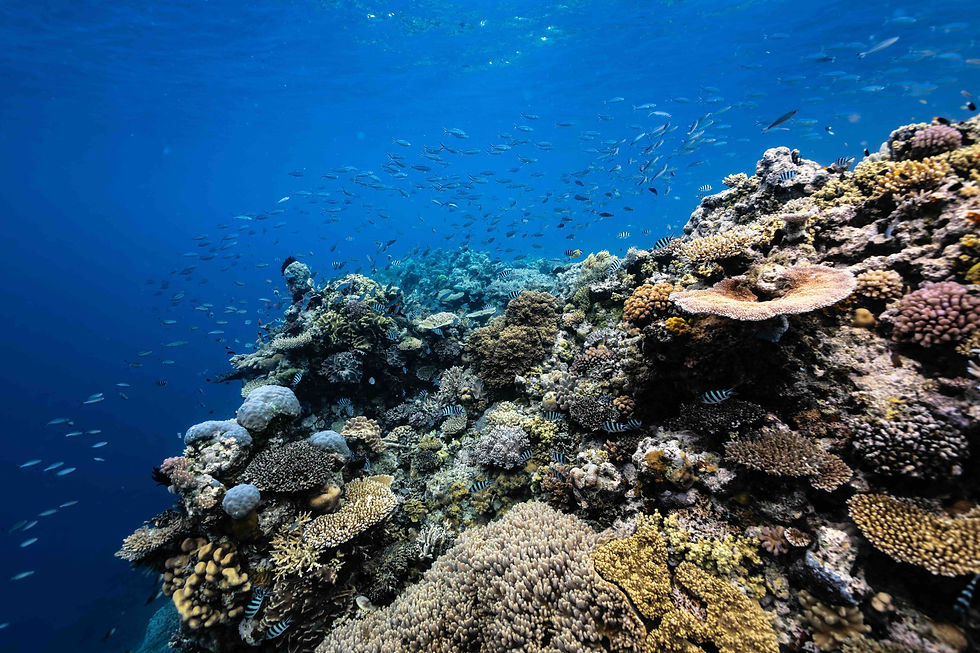


Pictures of healthy coral
Drag and drop!
Drag the correct word to the empty spaces to learn more about Anny.